
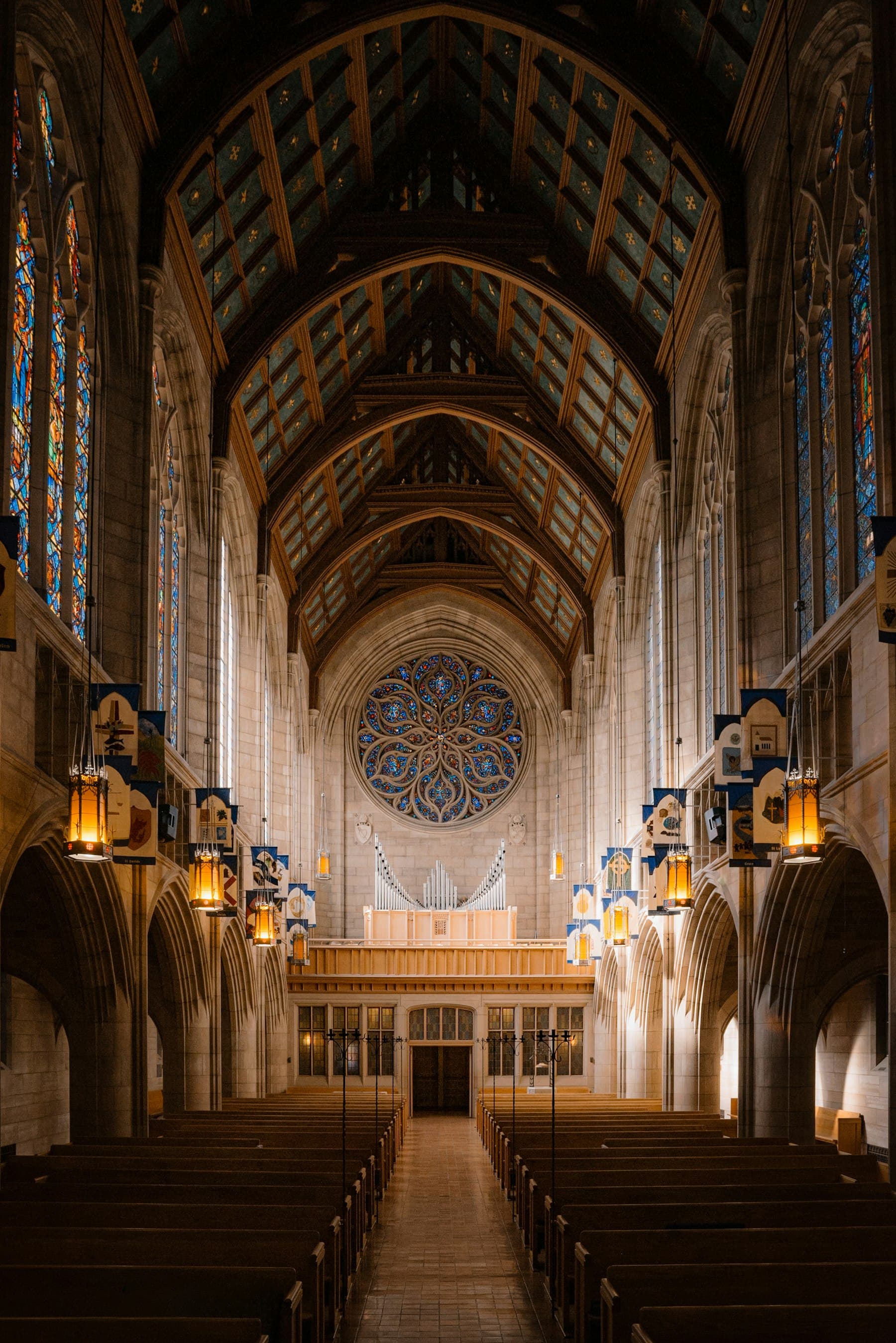
Church
Bethlehem Baptist
Baptist: a neutral profile of what this congregation describes about its beliefs.
Where to find them
Public details for this congregation.
TraditionBaptistAbout →
Sourcing statusTradition default
Beliefs on file899 positions
Statement of faithNot on file
Where they stand
Each position below is labelled by how it was sourced, so you can weigh it for yourself.
VerifiedConfirmed by the church
From their statement of faithEstimated, not verified
Tradition defaultEstimated, not verified
Showing 96 of 899 positions across 18 topics. Expand any topic to see the rest.
God & the Trinity52 positions
- Analogical LanguageAffirmsTradition defaultHuman language about God is analogical: true but never capturing God univocally as it captures creatures.Estimated, not verified
- Apophatic PriorityAffirmsTradition defaultWhat God is in himself is ultimately beyond human comprehension, so negative ("God is not...") statements are more reliable than positive ones.Estimated, not verified
Christ67 positions
- Assumed Fallen Human NatureStrongly rejectsTradition defaultChrist assumed a fully fallen human nature (subject to the effects of the Fall) in order to heal it from within.Estimated, not verified
- Assumed Unfallen Human NatureStrongly affirmsTradition defaultChrist assumed an unfallen, sinless human nature, untouched by original sin/corruption.Estimated, not verified
Sin & the fall45 positions
- Adams Sin Brought Physical DeathStrongly affirmsTradition defaultPhysical death entered the human race as a consequence of Adam's sin; humans were not originally subject to death.Estimated, not verified
- All Sin Deserves Death EquallyStrongly affirmsTradition defaultEvery sin, however small, deserves God's condemnation/death: there is no class of sin that does not by nature merit it.Estimated, not verified
Salvation60 positions
- Active Obedience ImputedStrongly affirmsTradition defaultChrist's lifelong law-keeping (his "active obedience"), not only his death, is imputed to the believer as their positive righteousness.Estimated, not verified
- Assurance Grounded In Christ AloneStrongly affirmsTradition defaultAssurance rests on Christ's finished work and God's promise, not on the believer's own works or sacramental performance.Estimated, not verified
The Holy Spirit56 positions
- All Gifts Continue TodayStrongly rejectsTradition defaultAll the spiritual gifts described in the New Testament, including the miraculous ones, continue and are normative for the church today.Estimated, not verified
- Assurance Is Normal For BelieversStrongly affirmsTradition defaultSettled assurance of salvation is normal and to be expected for genuine believers in this life.Estimated, not verified
The Church56 positions
- Apostolicity Is Doctrinal Not SuccessionalStrongly affirmsTradition defaultApostolicity consists primarily in fidelity to apostolic DOCTRINE, not in an unbroken chain of ordinations from the apostles.Estimated, not verified
- Baptism Is The Entry Into The ChurchStrongly affirmsTradition defaultBaptism is the rite of entry/incorporation into the visible church.Estimated, not verified
Sacraments & ordinances51 positions
- Age Of Accountability Before BaptismStrongly affirmsTradition defaultBaptism should wait until a person reaches an age of accountability and can repent and believe for themselves.Estimated, not verified
- Anointing Sick Is A SacramentRejectsTradition defaultAnointing of the sick with oil is a sacrament conveying grace, healing, and forgiveness to the seriously ill.Estimated, not verified
Worship & liturgy37 positions
- Altar Call InvitationStrongly affirmsTradition defaultA public invitation/altar call inviting people to come forward to receive Christ or rededicate is a fitting close to worship.Estimated, not verified
- Bowing And ProstrationStrongly rejectsTradition defaultBowing, prostration, or full physical reverence before the altar, icons, or sacrament is fitting in worship.Estimated, not verified
Last things28 positions
- A Literal Mark Of The Beast Is ComingAffirmsTradition defaultA literal future "mark of the beast" will be imposed as a condition of economic participation.Estimated, not verified
- Apocalyptic Prophecy Read Literally FuturisticallyAffirmsTradition defaultThe prophecies of Daniel and Revelation should be read primarily as literal predictions of still-future events.Estimated, not verified
Scripture62 positions
- Authority Holy Tradition OrthodoxStrongly rejectsTradition defaultScripture is rightly read only within Holy Tradition: the Fathers, councils, liturgy, and consensus of the Church.Estimated, not verified
- Authority Magisterium InterpretsStrongly rejectsTradition defaultThe authentic interpretation of Scripture is entrusted to the Church's living teaching office (Magisterium), whose judgments bind the faithful.Estimated, not verified
- Authority No Creed But BibleStrongly affirmsTradition defaultThe Church should bind conscience to "no creed but the Bible," rejecting man-made confessions as tests of fellowship.Estimated, not verified
- Authority Over Conscience IndividualStrongly affirmsTradition defaultAn individual believer may rightly stand on Scripture against the consensus of the Church when conscience so requires.Estimated, not verified
- Authority Scripture Plus Tradition CoordinateStrongly rejectsTradition defaultScripture and apostolic Tradition together form one deposit of God's Word, both to be received with equal devotion.Estimated, not verified
- Authority Sola ScripturaStrongly affirmsTradition defaultScripture is the sole infallible rule of faith and practice for the Church.Estimated, not verified
- Canon Apocrypha Useful Not CanonRejectsTradition defaultThe apocryphal books are profitable for reading and edification but are not authoritative for establishing doctrine.Estimated, not verified
- Canon Church DeterminesStrongly rejectsTradition defaultThe Church, exercising her God-given authority, determined and authoritatively defined which books are canonical.Estimated, not verified
- Canon Church Recognized Not ConferredStrongly affirmsTradition defaultThe Church recognized the canon that God had already constituted, rather than creating or conferring canonicity.Estimated, not verified
- Canon Closed CompleteStrongly affirmsTradition defaultThe canon of Scripture is permanently closed; no new books can be added.Estimated, not verified
- Canon Deuterocanon ScriptureStrongly rejectsTradition defaultThe deuterocanonical/apocryphal books (e.g., Tobit, Wisdom, Sirach, 1-2 Maccabees) are fully canonical Scripture.Estimated, not verified
- Canon Ethiopian Enoch JubileesStrongly rejectsTradition defaultBooks such as 1 Enoch and Jubilees belong in the biblical canon.Estimated, not verified
- Canon Marcion NarrowStrongly rejectsTradition defaultThe Old Testament should be rejected or radically subordinated because its God differs from the God revealed in Jesus.Estimated, not verified
- Canon New Revelation LdsStrongly rejectsTradition defaultScripture includes additional latter-day revealed books beyond the Bible (e.g., the Book of Mormon, Doctrine and Covenants, Pearl of Great Price).Estimated, not verified
- Canon Old Testament Authority EqualStrongly affirmsTradition defaultThe Old Testament is fully and equally Scripture alongside the New Testament.Estimated, not verified
- Canon Open ContinuingStrongly rejectsTradition defaultThe canon of Scripture is open in principle: God may add new authoritative written revelation in the present or future.Estimated, not verified
- Canon Orthodox WiderStrongly rejectsTradition defaultBooks beyond the Roman Catholic canon (e.g., 3 Maccabees, Psalm 151, 1 Esdras, and in some churches 4 Maccabees or Enoch) are rightly received as Scripture.Estimated, not verified
- Canon Protestant 66Strongly affirmsTradition defaultThe canon of Scripture consists of exactly the 66 books of the Protestant Bible.Estimated, not verified
- Canon Self AuthenticatingStrongly affirmsTradition defaultThe canonical books are self-authenticating: believers recognize them as Scripture through the internal witness of the Holy Spirit, not by the Church's decree.Estimated, not verified
- Function Norms All DoctrineStrongly affirmsTradition defaultEvery doctrine the Church teaches must be testable by, and answerable to, Scripture.Estimated, not verified
- General Revelation SupplementsStrongly affirmsTradition defaultGod's revelation in nature and conscience gives reliable, though limited, knowledge of God independent of Scripture.Estimated, not verified
- Herm Allegorical DefaultStrongly rejectsTradition defaultAllegorical and figurative interpretation, rather than the literal-historical, should be the default key to Scripture's deeper meaning.Estimated, not verified
- Herm Fourfold Spiritual SensesRejectsTradition defaultBeyond the literal sense, Scripture carries genuine spiritual senses (allegorical, moral, anagogical) intended by God.Estimated, not verified
- Herm Historical Critical MethodStrongly rejectsTradition defaultCritical-historical study (source, form, and redaction criticism) is a legitimate and necessary tool for understanding Scripture.Estimated, not verified
- Herm Historical GrammaticalStrongly affirmsTradition defaultThe proper method of interpretation seeks the single intended meaning of the human author in his historical and grammatical context.Estimated, not verified
- Herm Literal Sense PrimaryStrongly affirmsTradition defaultThe literal sense (the plain, intended meaning) is the foundation and control for all other senses of Scripture.Estimated, not verified
- Herm Reader Constructs MeaningStrongly rejectsTradition defaultThe meaning of a biblical text is significantly constituted by the reader or community, not fixed solely by authorial intent.Estimated, not verified
- Herm Redemptive Historical Christ CenterStrongly affirmsTradition defaultAll of Scripture finds its unifying meaning in Christ and the unfolding plan of redemption, and should be read Christocentrically.Estimated, not verified
- Herm Scripture Interprets ScriptureStrongly affirmsTradition defaultObscure passages of Scripture should be interpreted in light of clearer passages ("the analogy of Scripture").Estimated, not verified
- Herm Tradition Rule Of FaithStrongly rejectsTradition defaultScripture must be interpreted according to the Church's "rule of faith" / received tradition, which constrains permissible readings.Estimated, not verified
- Herm Typology LegitStrongly affirmsTradition defaultOld Testament persons and events are divinely intended types that prefigure New Testament realities.Estimated, not verified
- Inerrancy AccommodationRejectsTradition defaultGod accommodated the limited knowledge of the human authors, so the Bible can reflect the erroneous cosmology or science of its time without compromising its religious message.Estimated, not verified
- Inerrancy Errancy AffirmedStrongly rejectsTradition defaultThe Bible contains real errors and contradictions, and Christian faith does not depend on its factual accuracy.Estimated, not verified
- Inerrancy Full All MattersStrongly affirmsTradition defaultScripture in its original manuscripts is entirely without error in all that it affirms, including matters of history and the natural world, not only faith and morals.Estimated, not verified
- Inerrancy Genesis HistoryStrongly affirmsTradition defaultThe early chapters of Genesis (creation, the fall, the flood) are intended as real history rather than primarily theological symbol or ancient myth.Estimated, not verified
- Inerrancy Gospels HarmonizableStrongly affirmsTradition defaultApparent discrepancies among the four Gospels can in principle be harmonized without conceding any actual error.Estimated, not verified
- Inerrancy Historical Narratives FactualStrongly affirmsTradition defaultThe historical narratives of Scripture (e.g., the exodus, the conquest, the bodily resurrection) record events that actually happened in space and time.Estimated, not verified
- Inerrancy Limited To Faith PracticeStrongly rejectsTradition defaultScripture is infallible in matters of faith and salvation but may contain incidental errors in history, science, or geography.Estimated, not verified
- Inerrancy Numbers Genealogies ExactAffirmsTradition defaultThe numbers, genealogies, and chronological details in Scripture are precise and reconcilable rather than approximate or schematic.Estimated, not verified
- Inerrancy Phenomenological LanguageStrongly affirmsTradition defaultScripture's descriptions of nature (e.g., the sun rising) are ordinary phenomenological language and do not constitute scientific error.Estimated, not verified
- Inspiration Barthian Becomes WordStrongly rejectsTradition defaultThe Bible is not in itself the Word of God but becomes the Word of God in the event of God addressing a person through it.Estimated, not verified
- Inspiration Concursive Human PersonalityStrongly affirmsTradition defaultGod so worked through the human authors that their own personalities, vocabulary, and circumstances genuinely shaped the text while it remained God's word.Estimated, not verified
- Inspiration DegreesStrongly rejectsTradition defaultSome books or passages of Scripture are more fully inspired than others.Estimated, not verified
- Inspiration Dynamic OnlyRejectsTradition defaultGod inspired the writers' thoughts and impulses but left the choice of words wholly to human discretion.Estimated, not verified
- Inspiration Extends To WordsStrongly affirmsTradition defaultInspiration extends to the actual words of the original text, not only to the general ideas or concepts.Estimated, not verified
- Inspiration Holy Spirit AuthorStrongly affirmsTradition defaultThe Holy Spirit is properly called the divine author of Scripture.Estimated, not verified
- Inspiration Illumination OnlyStrongly rejectsTradition default"Inspiration" refers only to the heightened spiritual insight of gifted human authors, comparable in kind (if not degree) to other great religious writing.Estimated, not verified
- Inspiration Plenary WholeStrongly affirmsTradition defaultAll parts of Scripture are equally inspired, not merely the doctrinally central or "religious" portions.Estimated, not verified
- Inspiration Redletter PriorityStrongly rejectsTradition defaultThe recorded words of Jesus carry greater authority than other portions of Scripture.Estimated, not verified
- Inspiration Supernatural OriginStrongly affirmsTradition defaultThe Christian Scriptures originated through a genuine act of God, not merely human religious reflection.Estimated, not verified
- Inspiration Witness To RevelationStrongly rejectsTradition defaultScripture is best understood as a fallible human witness pointing to revelation, rather than as revelation itself.Estimated, not verified
- Interpretation Private Judgment LegitStrongly affirmsTradition defaultIndividual believers, illumined by the Spirit, are competent to interpret Scripture for themselves.Estimated, not verified
- Necessity Scripture For Knowledge Of GodStrongly affirmsTradition defaultScripture is necessary for a saving and reliable knowledge of God that nature alone cannot provide.Estimated, not verified
- Perspicuity ClarityStrongly affirmsTradition defaultThe essential teachings of Scripture, especially the way of salvation, are clear enough that ordinary believers can understand them without a specialized interpreter.Estimated, not verified
- Perspicuity Requires ChurchStrongly rejectsTradition defaultScripture is sufficiently obscure that private readers will go astray without the Church's authoritative guidance.Estimated, not verified
- Scripture Culturally Conditioned RevisableStrongly rejectsTradition defaultSome of Scripture's moral teachings are culturally conditioned and may be revised or set aside in light of contemporary moral insight.Estimated, not verified
- Scripture Layperson Should ReadStrongly affirmsTradition defaultEvery believer should read the Scriptures directly in their own language.Estimated, not verified
- Scripture Living Voice TodayStrongly affirmsTradition defaultThrough the Holy Spirit, Scripture speaks directly and personally to the believer today, not merely as an ancient record.Estimated, not verified
- Scripture Unique Above Other Sacred TextsStrongly affirmsTradition defaultThe Christian Scriptures are uniquely God's word in a way that the sacred texts of other religions are not.Estimated, not verified
- Scripture Word And Sacrament BalanceRejectsTradition defaultScripture's authority is exercised chiefly through its public proclamation and the sacraments, rather than primarily through private reading.Estimated, not verified
- Sufficiency ScriptureStrongly affirmsTradition defaultScripture contains all things necessary for salvation and for the faith and life of the Church; nothing essential is lacking.Estimated, not verified
- Text Formal EquivalenceAffirmsTradition defaultBible translation should follow the original wording and structure as closely as possible (formal/word-for-word equivalence).Estimated, not verified
Revelation, creation & science35 positions
- Adam Special Creation From DustStrongly affirmsTradition defaultThe first human was specially and directly created by God from the dust, not biologically descended from earlier hominins.Estimated, not verified
- Angels Created BeingsStrongly affirmsTradition defaultAngels and other spiritual beings are part of God's created order, made by God.Estimated, not verified
Life & bioethics63 positions
- Abortifacient Contraception WrongStrongly affirmsTradition defaultMethods that can prevent implantation of an already-fertilized embryo (e.g., certain IUDs, emergency contraception) are morally equivalent to early abortion and impermissible.Estimated, not verified
- Abortion A Protected RightStrongly rejectsTradition defaultAccess to abortion is a fundamental right that should be legally protected.Estimated, not verified
Sexuality & marriage54 positions
- Abortifacient Contraception WrongStrongly affirmsTradition defaultContraceptive methods that may act after fertilization (potential abortifacients) are morally wrong even if other contraception is permitted.Estimated, not verified
- Annulment Recognizes Invalid MarriageRejectsTradition defaultSome unions that appeared to be marriages were never valid marriages, and the church can rightly declare them null (annulment).Estimated, not verified
Society & politics48 positions
- Active Nonviolent Resistance ObligatoryAffirmsTradition defaultChristians should actively resist injustice through nonviolent means (protest, civil disobedience, noncooperation), not merely abstain from violence.Estimated, not verified
- Capital Punishment LegitimateAffirmsTradition defaultThe civil authority may rightly execute criminals for grave crimes.Estimated, not verified
Angelology Demonology49 positions
- Angelic Fall Caused By PrideStrongly affirmsTradition defaultThe angels fell primarily through pride: refusing subjection to God / seeking to exalt themselves.Estimated, not verified
- Angelic Fall Predates Human FallAffirmsTradition defaultThe angelic rebellion occurred before the fall of humanity, and the serpent's temptation issued from an already-fallen angel.Estimated, not verified
Anthropology45 positions
- Body Essential To PersonStrongly affirmsTradition defaultThe body is essential to being a complete human person, not an accidental or dispensable container for the soul.Estimated, not verified
- Body GoodStrongly affirmsTradition defaultThe material human body is intrinsically good as created by God.Estimated, not verified
Covenant Law Israel30 positions
- Abrahamic Covenant Foundational And OngoingStrongly affirmsTradition defaultThe Abrahamic covenant is foundational and its promises remain operative for the people of God today.Estimated, not verified
- Baptism Replaces Circumcision Covenant SignStrongly rejectsTradition defaultBaptism is the New Covenant counterpart to circumcision, marking entrance into the covenant community.Estimated, not verified
Mariology Saints61 positions
- All Believers Are SaintsStrongly affirmsTradition default"Saints" in the New Testament sense means all believers, not a special canonized class.Estimated, not verified
- Altar Relics Required Or ProperStrongly rejectsTradition defaultIt is fitting (or required) that altars contain the relics of saints.Estimated, not verified
Churches nearby
Other congregations in the directory near this one.

Want to study this church's tradition at the source? Bible Gateway Plus or Logos Bible Software pair well with any statement of faith.
Keep exploring
See where the Baptist tradition typically lands, or take the quiz to get your % match with every church.